Wondering whether your animals and your trees can share the same land? Silvopasture does exactly that: trees, forage and livestock are managed together on one piece of land, so each part helps the others.
This guide is part of our series on what is agroforestry, and it looks at the grazing side of the picture.
| Item | Key fact |
|---|---|
| What silvopasture is | Designed and managed for trees, tree products, forage and livestock together |
| Cold effect on livestock | Tree protection can cut it by 50 percent or more |
| Wind speed | Can be reduced by as much as 70 percent |
| Tree component | High-value timber |
| Livestock component | Short-term cash flow |
| Forage type | Perennial, productive under partial shade and moisture stress |
Figures come from the Overstory article on silvopasture. They describe conditions in that source and can change, so check the source before you rely on them.
What silvopasture means
The word joins “silva” (forest) with “pasture”. In a silvopasture, the land is deliberately managed for trees, tree products, forage and livestock, not just left to animals that happen to wander under trees.
According to the Overstory article, silvopasture results when forage crops are deliberately introduced or enhanced in a timber production system, or when timber crops are deliberately introduced or enhanced in a forage production system. Either way, the timber and the pasture are run as one integrated system.
That is the difference from simply letting cattle, goats or sheep graze in a woodland. Without planning, animals can damage young trees and the forage can thin out. With planning, each part earns its place.
How trees help the animals
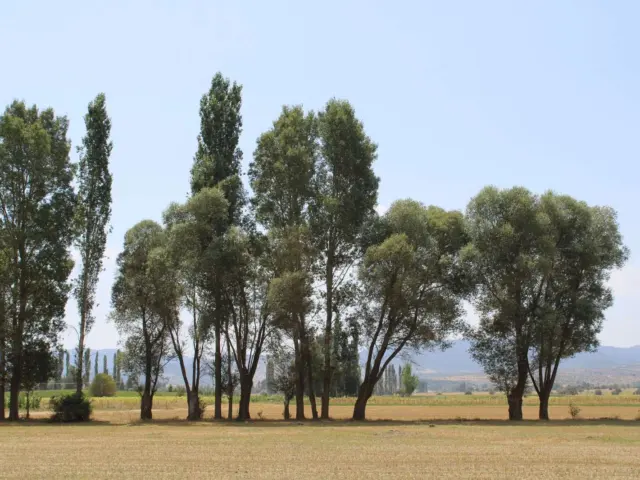
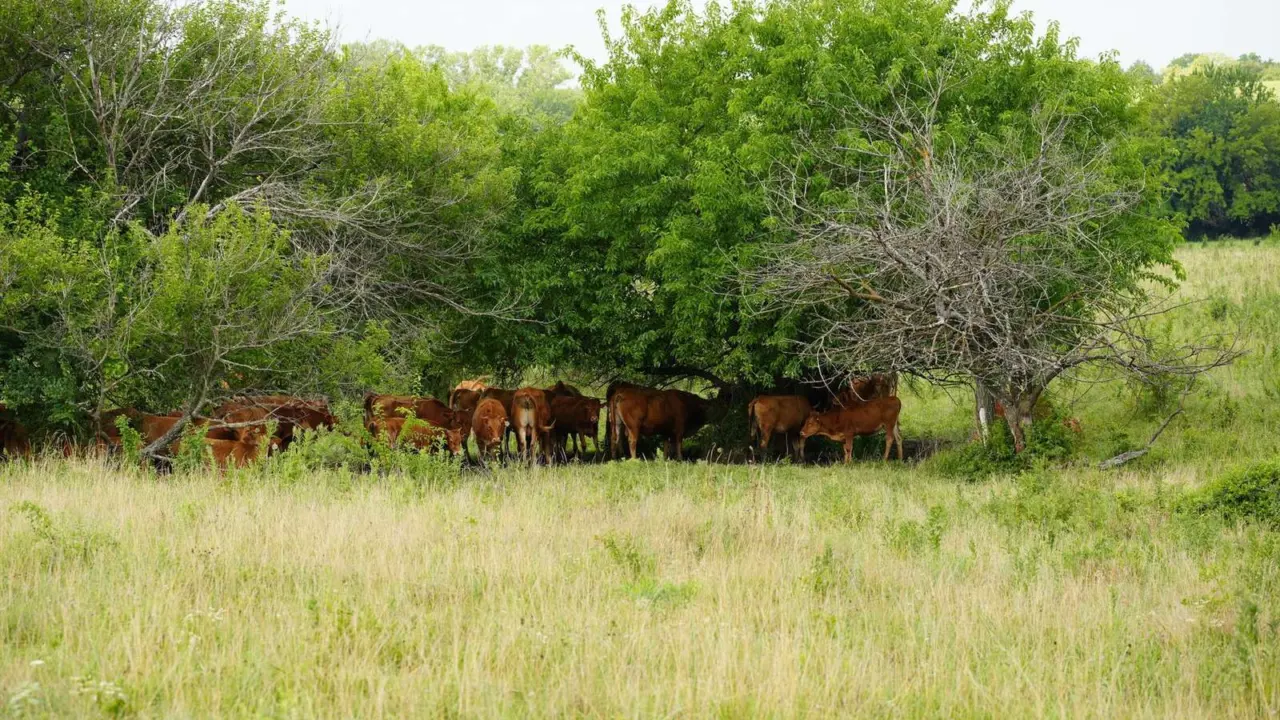
Shade is the benefit most people notice first. The Overstory article says trees that provide shade or wind protection can have a climate-stabilizing effect that reduces heat stress and windchill in livestock.
It also reports that protection from trees can cut the direct cold effect by 50 percent or more and reduce wind velocity by as much as 70 percent. Conditions differ from place to place, so treat them as an illustration of the principle rather than a promise for your farm.
Forage can improve too. The same source notes that some forage species tend to be lower in fiber and more digestible when grown in a tree-protected environment.
How animals help the trees and the pasture
The benefits run both ways. Grazing can enhance tree growth by controlling grass competition for moisture, nutrients and sunlight.
In addition, livestock manure recycles nutrients to trees and forage. Nutrients taken up by the trees and forage are returned to the site through the animals.
- Less weed and grass competition around the tree base, when grazing is timed well.
- Nutrient recycling through manure spread across the site.
- Shade and shelter for animals during hot or windy weather.
Income from more than one product
Silvopastoral systems are designed to produce a high-value timber component while providing short-term cash flow from the livestock component. Trees take years to mature, so animals can pay the bills in the meantime.
The Overstory article also says economic risk is reduced because the system produces multiple products, most of which have an established market. If one product has a poor year, another may carry you through.
In Africa, trees can also supply fodder, fruit, poles or firewood, depending on the species. Which products make sense depends on your local markets, so check what buyers near you actually pay for before choosing.
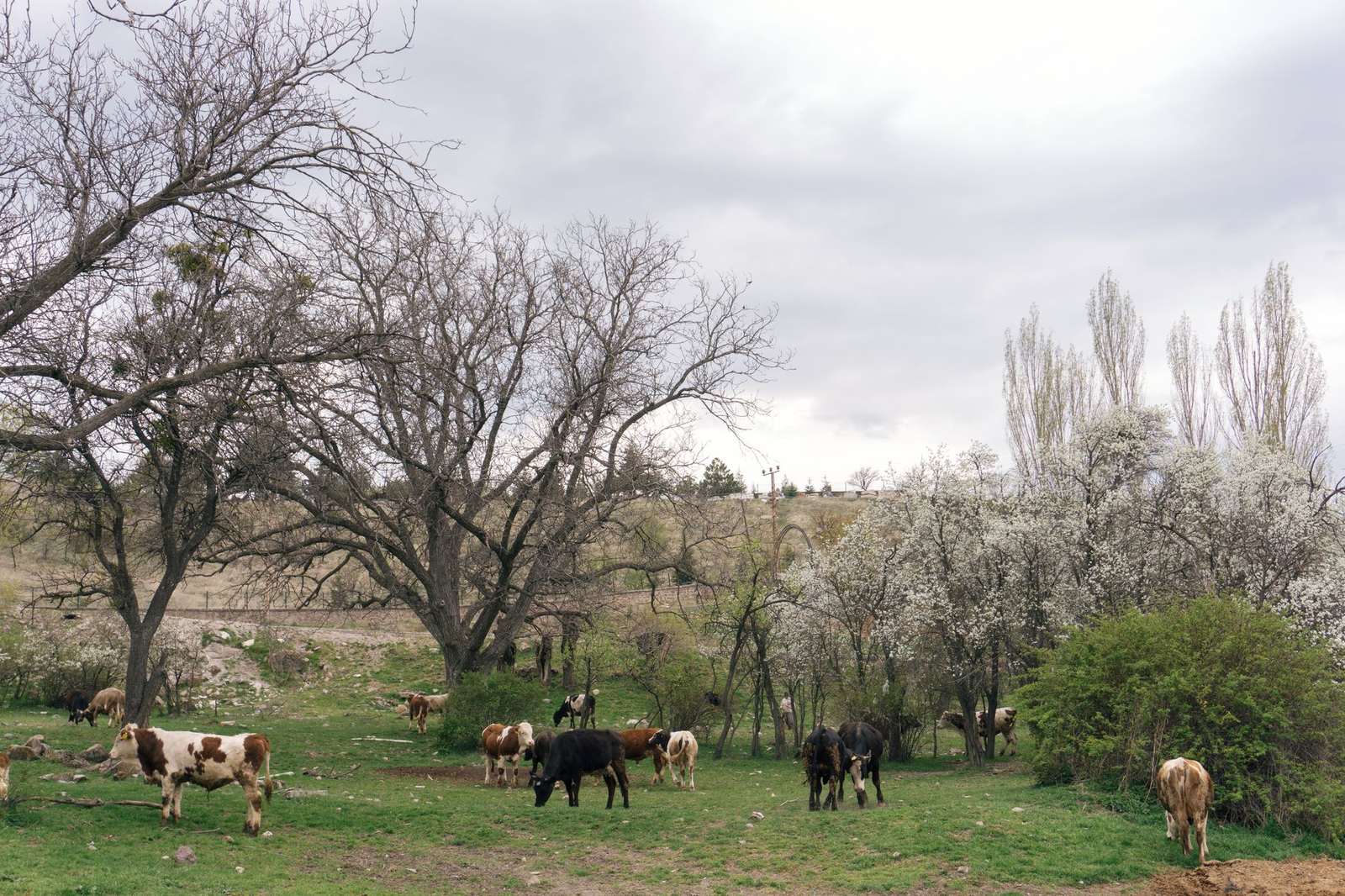
Designing a silvopasture
The Overstory article says silvopastures can be established on any land capable of simultaneously supporting tree and forage growth. The right method depends on woodland or forest type, or on your existing pasture, and on your own objectives, such as timber, environmental benefits or wildlife.
The forage should be a perennial crop that fits the site. The source lists these needs:
- Suitable for livestock grazing.
- Compatible with the site’s soil, temperature and precipitation.
- Productive under partial shade and moisture stress.
- Responsive to intensive management.
- Tolerant of heavy use.
Before you plant, the article advises exploring the economic and environmental implications of merging forestry and agricultural systems, along with local land use rules and cost-share programs. In practice, that means talking to neighbours and local extension staff about land tenure and grazing rights first.
Choosing trees and linking to other systems
Silvopasture is one of several designs described in types of agroforestry systems, alongside alley cropping and windbreaks. It can also borrow ideas from them, for example by planting a tree line that doubles as a windbreak for animals.
Tree choice matters. Species that feed the soil can help the pasture, and our guide to nitrogen fixing trees explains how some of them work.
Whatever you choose, protect young trees from browsing until they are tall enough, and keep animals out of the area during establishment. Local advisers will know which species suit your rainfall and soil.
Common mistakes to avoid
Most problems come from skipping the planning step. A few patterns are worth watching for as you set up your own plot.
- Grazing too early. Young trees are easily browsed or trampled, so give them time and protection before animals enter.
- Heavy use of the pasture. The source asks for forage that tolerates heavy use, but that does not mean ignoring rest periods. Moving animals lets the grass recover.
- Too much shade. Forage needs to stay productive under partial shade, so dense canopies can leave the ground bare.
- Ignoring local rules. Land tenure, grazing rights and tree ownership can differ from place to place, and conflicts are costly.
None of these is a reason to avoid the approach. They are reasons to start small, watch what happens over a season or two, and adjust.
Is silvopasture right for your land?
Start with what you already have. If you run animals on open pasture, adding trees brings shade and a future product. If you own woodland or an orchard, introducing forage and a few animals can add early income.
Think about three questions before you commit:
- Can your soil and rainfall support both trees and a perennial forage at the same time?
- Which tree products can you actually sell or use, and how long will they take to mature?
- Can you manage animal movement so young trees are protected?
If the answer to all three is yes, a small trial plot is a sensible next step. This site is educational only and does not offer advice for individual farms, so check with local agricultural or forestry advisers before you invest.
Frequently asked questions
Is silvopasture the same as grazing in a forest?
Show answer
No. Silvopasture is designed and managed for trees, tree products, forage and livestock together, while unplanned woodland grazing is not managed as an integrated system.
Do animals harm the trees?
Show answer
They can, especially young trees, if grazing is not managed. The Overstory article says well-managed grazing can instead enhance tree growth by controlling grass competition.
Where can silvopasture be set up?
Show answer
According to the Overstory article, on any land capable of simultaneously supporting tree and forage growth.
Does silvopasture bring in income?
Show answer
The source says it can: timber provides the high-value component and livestock provide short-term cash flow. Actual returns depend on your local markets.