Wind is drying and battering your fields, and you want to know if trees can help. Windbreaks and shelterbelts slow the wind and shelter crops, but only when height, length, density and spacing suit your site.
Windbreaks are one of the oldest tree-and-crop combinations, and they sit within the wider field of what is agroforestry.
| Item | Value |
|---|---|
| Area protected vs. height | Directly proportional to windbreak height |
| Rule-of-thumb belt length | At least 10 times mature height |
| Very dense belt | Under 20 % optical porosity |
| Gap angle in multi-row belts | 45 degrees to the prevailing wind |
| Niger millet trial, seven species | No significant overall windbreak effect on yield |
The design figures come from the Overstory windbreak design guide and the Niger result from an ICRISAT repository record. Figures can change, so check the sources before you rely on them.
What windbreaks and shelterbelts do
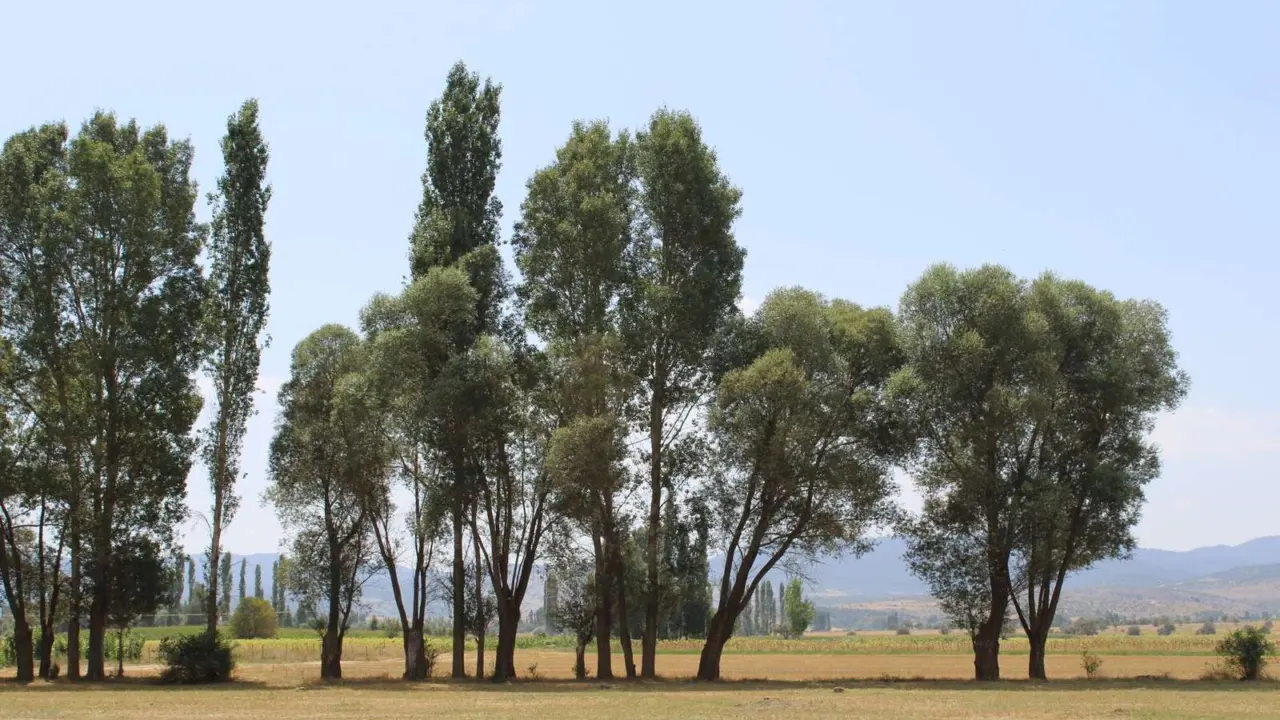
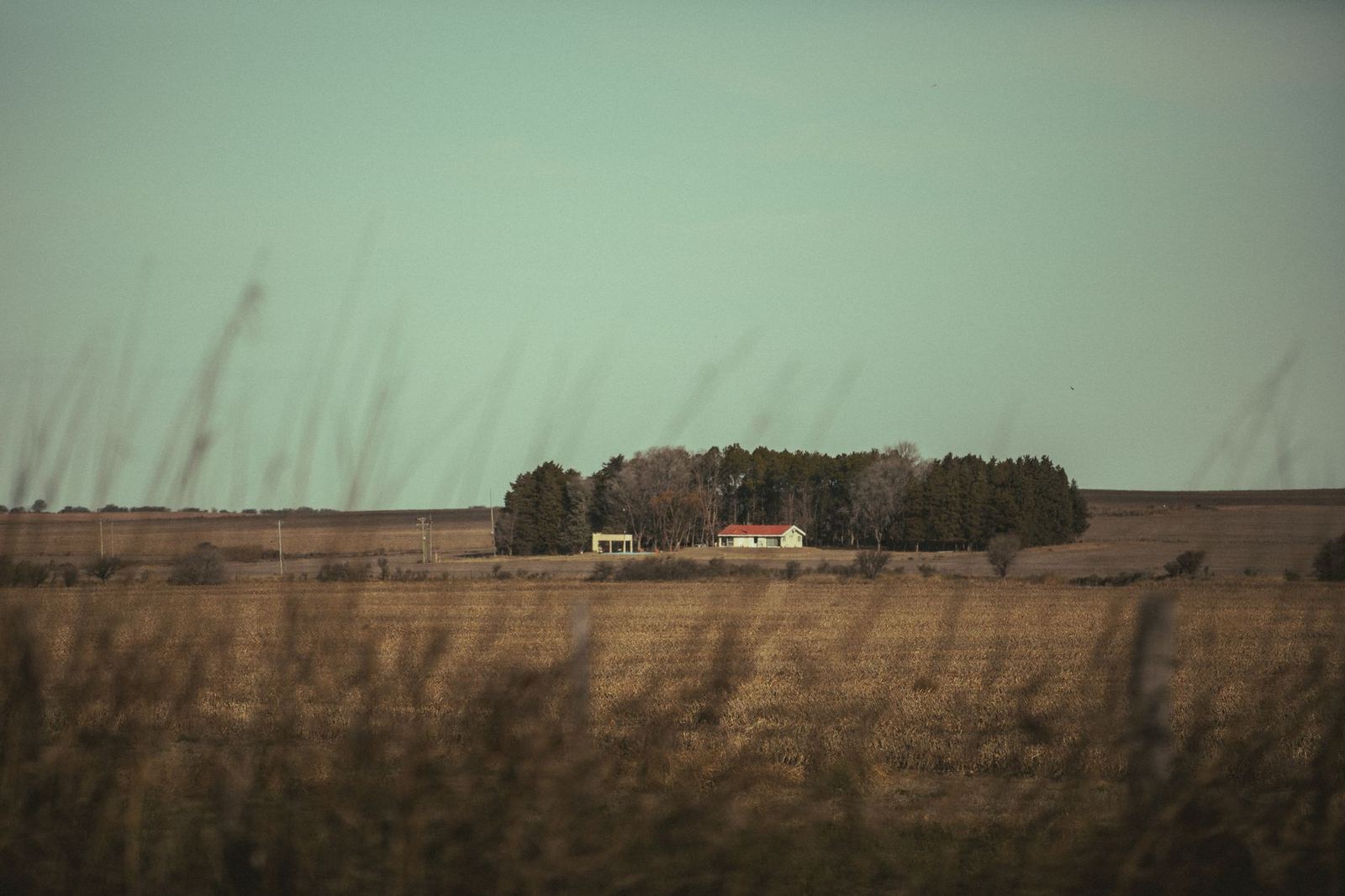
A windbreak is a row or several rows of trees and shrubs planted across the direction of the prevailing wind. A shelterbelt is usually the wider, multi-row version, though the two words are often used interchangeably.
The belt lowers wind speed near the ground. That protects soil from erosion and crops from physical damage, and it can reduce moisture loss in the sheltered zone.
Research on the Sahel describes the idea plainly: windbreaks “reduce the wind velocity near the soil surface, thus protecting soil and crops”, as a study of millet in windbreak-shielded fields puts it. The same study warns that windbreaks also compete with crops for limited resources, which may outweigh their benefits.
Wind harms crops in several ways. It lodges tall cereals, tears leaves, blows away topsoil and seed, and carries hot dry air that raises water stress. On open, sandy, or recently cleared land these losses can be severe, especially at planting time.
A belt will not fix every one of these problems. It works best as part of a wider plan that also includes ground cover, residue retention and sensible tillage.
Design: height, length and density
Design decides whether a belt helps or hurts. Three features matter most.
- Height: the protected area is directly proportional to height, so doubling the height doubles the area protected, according to the Overstory guide.
- Length: short belts are ineffective because wind curls around the ends. A common rule of thumb is a belt at least 10 times as long as its mature height.
- Density: very dense belts, under 20 % optical porosity, are desirable where a small area of high-quality shelter is required.
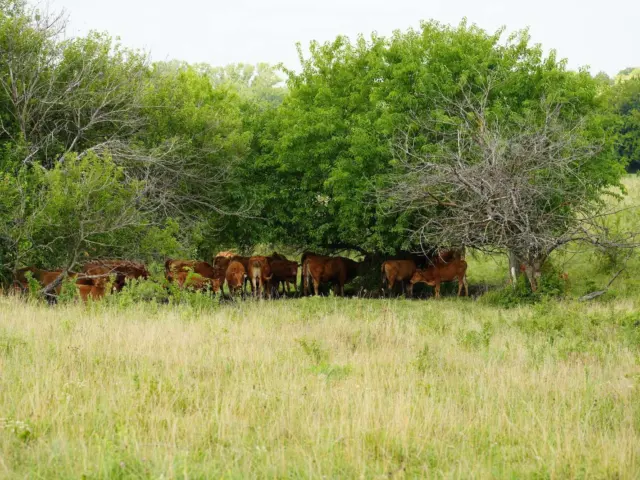
Very dense belts, under 20 % optical porosity, suit small areas needing high-quality shelter, such as livestock havens or houses. Which density suits a field depends on climate, soil, crop species and belt design, so test it on your own site.
Layout and species choice
Orient belts across the wind that damages your crops, not along it. In the Niger experiments, belts ran north-south, perpendicular to storms and prevailing winds, so they protected crops sown on their west side.
Gaps weaken a belt. If you need gates or access routes, the Overstory guide suggests that in multi-row belts the gap can be angled at 45 degrees to the prevailing wind.
Choose species with these points in mind:
- Pick trees that reach a good mature height on your soils and rainfall.
- Favour fast growers, because quick height means shelter arrives sooner.
- Check life span, so the belt does not collapse before it pays back.
- Prefer species that give you something useful, such as fuelwood, fodder or poles, and have roots that do not strip the neighbouring crop.
Local knowledge counts here. Farmers who already live with a wind problem usually know which native species survive and which ones sprawl into crop rows.
Do windbreaks raise yields? The Sahel evidence
The honest answer is: sometimes. Trees take water, light and nutrients near the belt, and that can cancel out the benefit of shelter.
In an on-station experiment in south-west Niger, researchers tested seven windbreak species and a mulch made from crop residue on pearl millet. They found no significant overall windbreak effect on millet stover and grain yields, according to the ICRISAT repository record. The experiment monitored effects on wind erosion and pearl millet production, using a soil mulch made from crop residue alongside the windbreak species.
The authors call mulch a promising alternative to complex windbreak-millet systems where farmers are not sure of a direct economic benefit. The Sahel study also notes that whether the overall effect is a gain or a loss depends on climate, soil, crop species and belt design.
So treat a belt as a long-term investment in site protection, not a guaranteed yield boost in year one.
Managing competition near the trees
Yield losses usually show up in the strip closest to the trees, where roots and shade bite hardest. You can limit the damage in a few ways:
- Plant lower-value or tolerant crops in the strip next to the belt.
- Remember that windbreaks compete with crops for limited resources, which may outweigh their potential benefits, so watch yields near the belt.
- Use mulch alongside the belt to hold soil and moisture.
Windbreaks also combine with other tree-based methods. If your main problem is poor soil fertility rather than wind, improved fallow may address it more directly. Where you want trees inside the cropped area itself, alley cropping is the usual option, though it brings its own competition.
Practical steps for a first belt
- Observe which direction the damaging winds come from, and in which season.
- Mark a line across that direction, along the edge of the field or a boundary.
- Plan a belt long enough relative to its mature height, so wind does not simply curl round the ends.
- Protect seedlings from livestock and fire, and water them through their first dry season.
- Watch the strip nearest the trees for several seasons, and adjust crops or pruning as needed.
Start small. A short trial belt will show you how local species behave before you commit a large area.
Think about upkeep too. Belts need replanting of gaps, protection from browsing animals, and occasional thinning or coppicing so that the lower layer stays leafy enough to slow the wind near the ground. Agree on who maintains a shared boundary belt before planting, because neglected belts quickly develop holes.
Finally, keep records. Note planting dates, losses, and crop performance by distance from the trees. After a few seasons these notes tell you more about your own site than any general rule.
Frequently asked questions
Is a windbreak the same as a shelterbelt?
Show answer
Not exactly. A windbreak can be a single row, while a shelterbelt is typically a wider belt of several rows, but people often use the terms for the same thing.
How far does a windbreak protect?
Show answer
Protection scales with height: the area sheltered is directly proportional to the height of the belt, according to the Overstory design guide. Taller mature trees therefore protect more land.
Will a windbreak always increase my yield?
Show answer
No. In the Niger millet experiment no significant overall windbreak effect on yield was found, and competition near trees can offset the shelter benefit.
Should the belt be dense or open?
Show answer
Very dense belts (under 20 % optical porosity) are desirable where a small area of high-quality shelter is required, such as livestock havens or around houses, according to the Overstory guide.