If you grow or buy cocoa, you may wonder whether trees belong in the plot. For cocoa agroforestry west africa evidence points to moderate shade, yet most farms have very little.
This guide sits within our wider coverage of agroforestry in africa.
| Item | Value |
|---|---|
| Share of world cocoa grown in Côte d’Ivoire and Ghana | Almost two thirds |
| Share of cocoa on farms with at least 30% large-tree shade | About 5% |
| Shade cover one researcher considers optimal | 30 to 40% |
| Carbon storage if the shade target were reached | Offsets 167% of cocoa-related emissions in the two countries |
| Seedlings distributed since 2018 under the Cocoa and Forests Initiative | 43 million |
These figures come from a SciDev.Net report on a Nature Sustainability study. Figures can change, so check the source before you rely on them.
Why cocoa and trees belong together
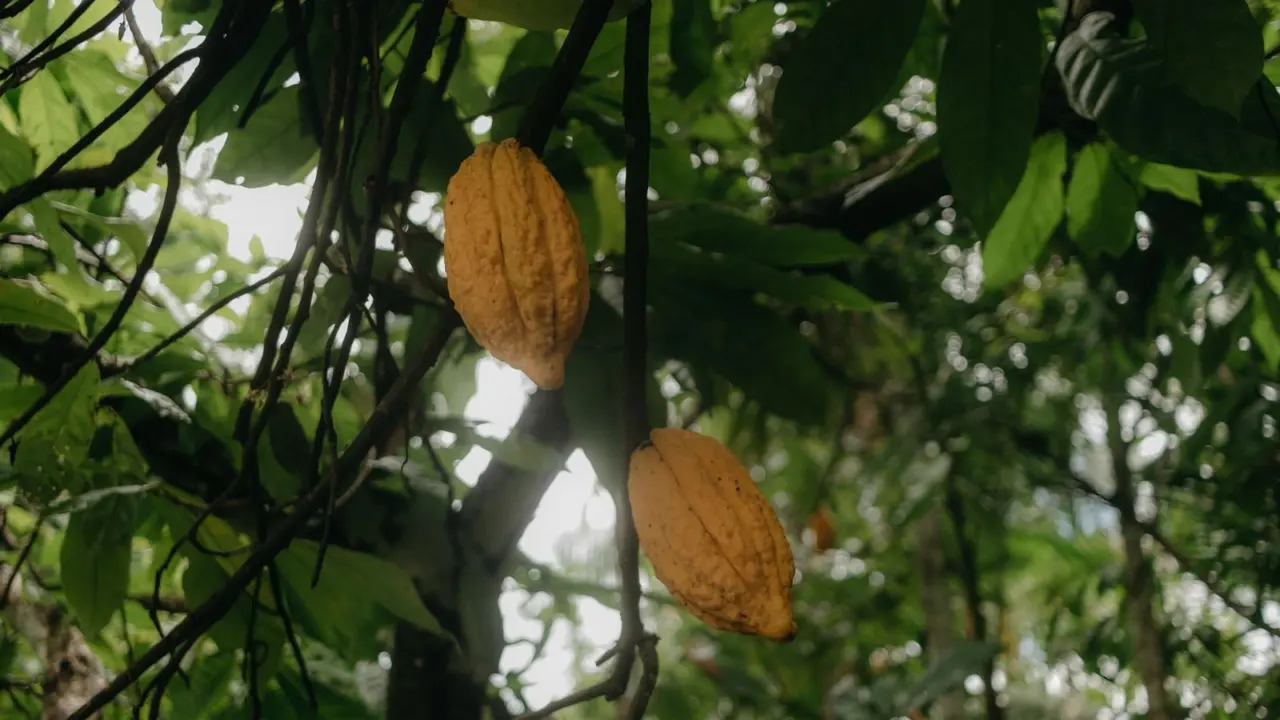
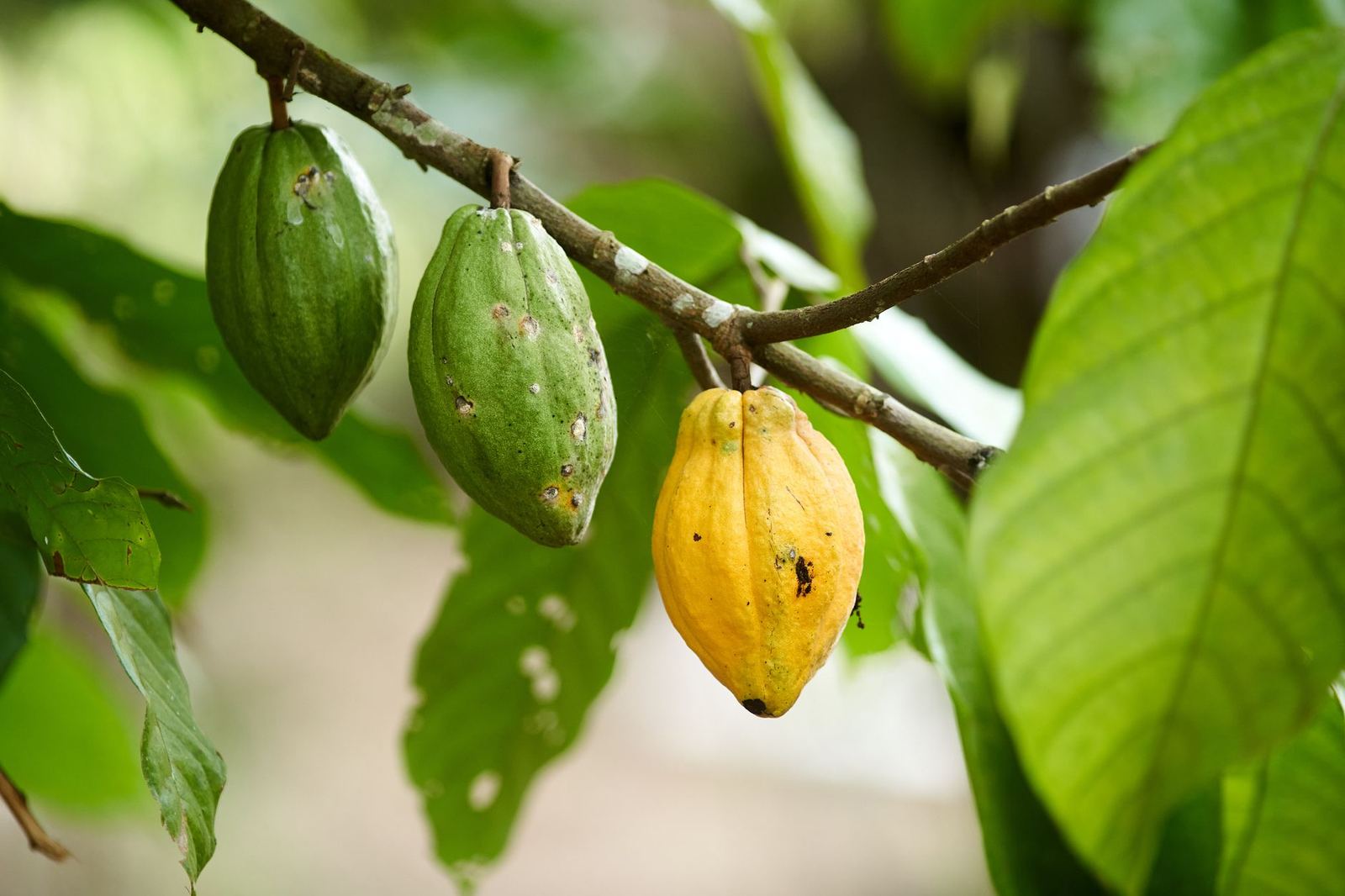
Cocoa is an understorey crop. In its natural setting it grows beneath taller forest trees, so shade is not foreign to it.
Shade trees can serve several purposes on a farm:
- cooling the air and soil around young cocoa trees;
- adding leaf litter that feeds the soil;
- storing carbon in trunks and branches;
- providing fruit, timber or fuelwood as a second income;
- sheltering wildlife in a farming landscape.
The choice is rarely all shade or no shade. Farmers decide how many trees, which species, and how big, and those choices change the result.
How much shade do farms actually have?
Very little. Researchers who used machine learning on satellite data across Côte d’Ivoire and Ghana, where almost two thirds of the world’s cocoa is grown, reported that only about five per cent of cocoa comes from farms with at least 30 per cent shade cover from large trees.
The authors of the preprint version put it plainly: cocoa production is “overwhelmingly dominated by full-sun monocultures and low-shade agroforestry”.
One researcher quoted in the news report said it was “very surprising to me just how low the shade tree cover was across the board”. That gap between promises and reality is the central story of cocoa agroforestry in the region.
The yield worry that keeps farmers away
Farmers have a reason for caution. A Ghanaian agroforestry expert told SciDev.Net that farmers are not adopting agroforestry because of its perceived potential impact on their yield.
Too much shade can reduce light, raise humidity and favour disease. Too little leaves cocoa exposed to heat and drought. The aim is a balance, not a forest.
The same report cites a researcher whose earlier work indicates that 30 to 40 per cent shade tree cover is optimal. Treat that as a guide from one researcher, not a rule for every farm, since soils, rainfall and tree species differ.
What would more trees achieve?
The study estimated a climate benefit. If enough trees were planted to reach the shade target, carbon storage would offset 167 per cent of cocoa-related greenhouse gas emissions in the two countries, without having to reduce production, according to the study.
That is a modelled estimate, not a measured outcome on farms. The preprint also warns that carbon benefits face concerns about permanence, including insecure land tenure and governance and climate risks.
Progress so far, and the limits
Planting efforts exist. According to the World Cocoa Foundation, 43 million tree seedlings have been distributed since 2018 under the Cocoa and Forests Initiative, a commitment by cocoa-producing countries to end deforestation and restore forests.
A researcher in the report judged that these seedlings would cover only about 11 per cent of the region if all were planted and grew to maturity. Seedlings handed out are also not the same as trees that survive.
Natural regeneration can help fill the gap in other systems. Our piece on farmer managed natural regeneration explains how farmers keep trees that sprout on their own land. For the wider restoration picture, see great green wall africa, though that effort is aimed at the drier Sahel rather than the cocoa belt.
Cocoa agroforestry in West Africa: the barriers
The reports point to a mix of economic and practical barriers rather than a single cause. Yield fear is the loudest, but it is not the only one.
- Perceived yield loss: farmers worry that shade cuts output, as the Ghanaian expert quoted above explains.
- Insecure tenure: the preprint links the permanence of tree benefits to land tenure, economics, governance and climate risk.
- Time: large trees take years to mature, while a farm family needs income every season.
- Delivery: handing out seedlings does not guarantee they are planted, protected and grown on.
Fixing these barriers takes secure rights, advice and income that reaches farmers while trees grow.
How to read the evidence
Two features of the sources deserve care. The satellite study maps shade cover from above, so it describes where large trees stand, not how each farm is managed. The carbon figure is a model, and modelled outcomes depend on trees surviving for decades.
The optimal shade range also comes from one researcher’s earlier work, relayed in a news report. A reader who wants to act on it should check the underlying studies and local trials first.
Even so, the direction is consistent across the sources. Shade is scarce, farmers have reasons for that, and any scheme that ignores those reasons is unlikely to change the picture.
What this means on the ground
- Start with moderate shade rather than dense canopy, and watch how cocoa responds.
- Keep or plant a mix of species that also give food, timber or fuel.
- Protect young trees, since survival matters more than the number planted.
- Look for secure rights to the trees, because insecure tenure weakens any long-term investment.
Local extension services and cooperatives can advise on species that suit your rainfall and soil.
Buyers and policymakers have a part too. Premiums, clear tree rights and support through the first years of tree growth would address the barriers above more directly than seedling counts do. Without them, the shade gap described in the study is likely to persist, and farmers carry the risk of waiting for trees to mature.
Whatever the scale, keep records of what you plant and how cocoa responds in each plot. Your own results are the best guide for the next planting season.
Frequently asked questions
Is cocoa agroforestry common in West Africa?
Show answer
Substantial shade is not. The study reported that only about five per cent of cocoa is grown on farms with at least 30 per cent shade cover from large trees, and the preprint says production is overwhelmingly dominated by full-sun monocultures and low-shade agroforestry.
How much shade is best for cocoa?
Show answer
One researcher cited by SciDev.Net says 30 to 40 per cent shade tree cover is optimal. Local conditions matter, so use it as a starting point.
Do shade trees lower cocoa yields?
Show answer
Farmers often fear so, and that perceived yield impact is a main reason for low adoption. Moderate shade is the usual recommendation rather than dense cover.
Can agroforestry offset cocoa’s emissions?
Show answer
The study estimated that reaching the shade target would offset 167 per cent of cocoa-related emissions in Côte d’Ivoire and Ghana. This is a modelled estimate.