Wondering whether the Great Green Wall Africa is a real wall of trees? It isn’t: it is a mosaic of restoration projects across the Sahel, and reported results still trail its 2030 targets.
This guide is one of our pieces on agroforestry in africa, and it covers what the initiative is and how far it has come.
| Item | Value |
|---|---|
| Founded | 2007, by the African Union and UNCCD |
| Area covered | 156 million hectares |
| 2030 restoration target | 100 million hectares of degraded land |
| Jobs target by 2030 | 10 million jobs |
| Reported under restoration | 1.66 million hectares |
| Reported jobs created | 4.6 million |
Figures come from the UNCCD Accelerator progress report and the One Planet Summit coalition page. They can change as new data arrive, so check the sources before you rely on them.
What is the Great Green Wall?
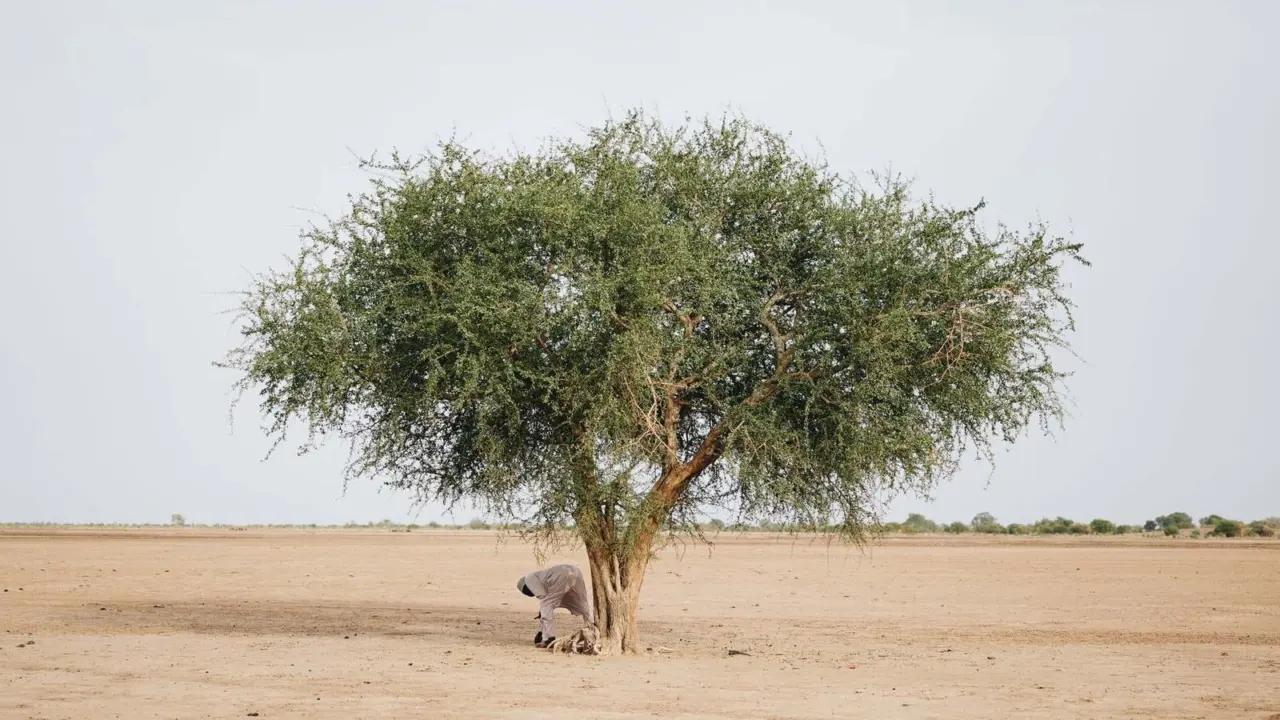
The initiative was founded in 2007 by the African Union and the UNCCD. It extends across 156 million hectares, from the Senegal River Basin in the west to the Horn of Africa in the east.
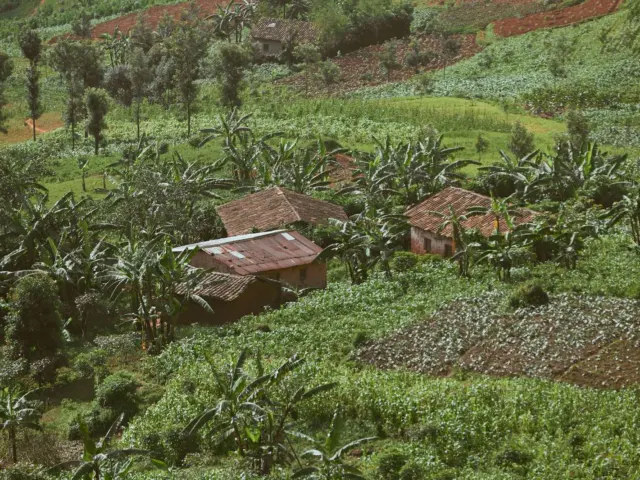
Despite the name, it is not one continuous belt of trees. It brings together many national and local projects that restore degraded land, such as stone lines, assisted tree regrowth, water harvesting and community gardens.
That is why it overlaps so strongly with agroforestry. Trees are grown on and around farms so that land stays productive while soils recover.
The idea also reflects a simple reality of dryland life. When soils lose cover, harvests shrink, wells run low and families have fewer reasons to stay. Restoring land is meant to reverse that slide and give people a living where they already are.
What are its targets for 2030?
The Accelerator was launched to give the initiative new momentum. According to its coalition page, it aims to restore 100 million hectares of degraded land by 2030, mainly for agricultural use. It also aims to create 10 million jobs and to capture 250 million tons of carbon.
The headline targets are:
- 100 million hectares of degraded land restored
- 10 million jobs created
- 250 million tons of carbon captured
The Accelerator was launched in 2021 after the One Planet Summit, where partners pledged more than $19 billion. Its job is to improve coordination, track funding and help countries measure results.
How is the Great Green Wall progressing?
An earlier analysis, reported in March 2023, said that as of 2020 about 20 million hectares had been restored and over 350,000 jobs created between 2007 and 2018. It also said that reaching 100 million hectares would need about 8.2 million hectares restored every year.
The UNCCD’s later Accelerator report gives a newer picture. Its available data show 1.66 million hectares under restoration, 24 million tons of CO₂ equivalent sequestered or mitigated, and 4.6 million jobs created. It also counts 46 million beneficiaries.
These sets of numbers are not directly comparable, because they come from different sources and the 20 million hectares is described as land restored as of 2020, while the 1.66 million hectares is land under restoration in the available data. Read them as signs of direction, not as a clean time series.
The jobs figure is the strongest result against its target. The report sets 4.6 million jobs against a 2030 goal of 10 million. Restoration and carbon results are further behind.
Why are the numbers so hard to pin down?
The main problem is reporting. The GGW Observatory now tracks over 389 projects, yet fewer than 90 currently report data aligned with the initiative’s harmonized indicators.
The UNCCD itself describes this as both early progress and significant gaps in reporting that are still being addressed. The Observatory now tracks over 389 projects, so the gap between tracked projects and reporting ones is large.
For readers, that means a few cautions:
- Totals mix projects that count different things, such as land planted, land protected or land under management.
- Only some tracked projects report data aligned with the harmonized indicators, so totals may be incomplete.
- A tree planted is not a tree surviving; survival depends on rain, grazing and local care.
How can you read a Great Green Wall headline?
News stories about the initiative often mix targets, pledges and results in a single sentence. Separating them is the quickest way to judge a claim.
- Check whether a number is a target for 2030, a pledge of money, or a result already measured.
- Look at the date of the data, because the initiative has been counted in several ways since 2007.
- Ask what is being counted: hectares under restoration, hectares restored, or jobs of any length.
- Go back to the original report and read its own caveats.
Applying these steps to the figures above, the picture is balanced. There are real gains in jobs and beneficiaries, large ambitions still ahead, and an honest admission from the UNCCD that its data are incomplete.
Seen that way, the initiative is less a finished wall than a long programme in which farmers, cooperatives, governments and funders are still learning how to measure and sustain what they plant. Its value will depend on whether trees and soils stay healthy long after the planting season ends.
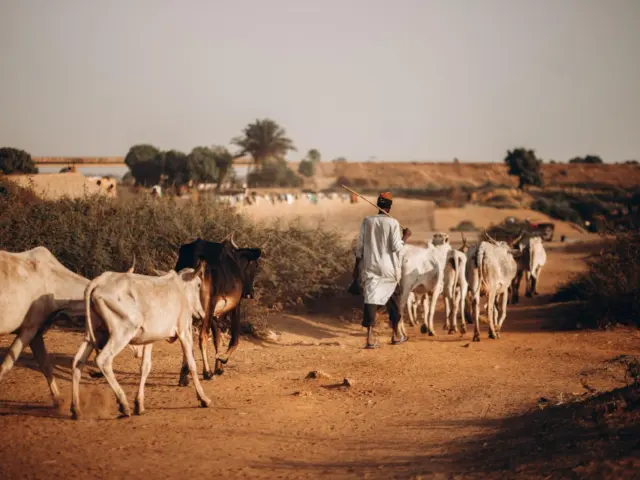
It also helps to remember that the Sahel is a place where people already farm and herd. Projects that keep those livelihoods at the centre, by letting farmers keep trees on their fields and share the benefits, are the ones most likely to last.
Is the money arriving?
Money is the other constraint. The 2023 analysis said US$2.5 billion of the pledged funding had been disbursed by then, and that the US$33 billion needed for the vision was still out of reach.
A pledge is not a payment, and programmed funds still have to reach villages. The Accelerator was created to improve coordination, track funding and help countries measure results.
What does it mean for farmers and local communities?
Restoration here is also a jobs and food-security project. The UNCCD report compares its reported jobs against the 2030 target of 10 million, and argues restoration is an economic undertaking as well as an environmental one.
One example in the report is a quote from a participant who says their municipality granted them four hectares of land to scale up production.
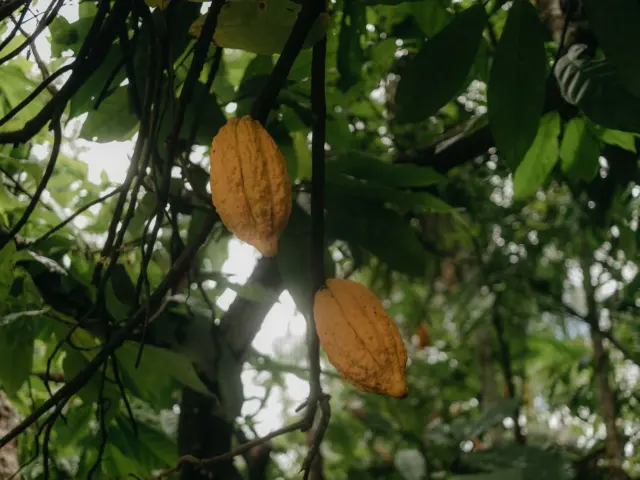
The same logic applies elsewhere in Africa. Our guide to cocoa agroforestry west africa shows how trees can support incomes in a very different landscape. Likewise, agroforestry in kenya shows what farm-level tree planting looks like in practice.
Frequently asked questions
Is the Great Green Wall a physical wall of trees?
Show answer
No. It is a set of restoration projects across a region stretching from the Senegal River Basin in the west to the Horn of Africa in the east.
Who started the Great Green Wall?
Show answer
The African Union and the UNCCD founded it in 2007.
How much land has been restored so far?
Show answer
The UNCCD’s Accelerator report cites 1.66 million hectares under restoration in the data available. An earlier analysis reported about 20 million hectares restored as of 2020, using a different basis, so the two do not line up.
Will it reach its 2030 targets?
Show answer
The reported totals sit well below the 100 million hectare and 10 million job targets. The UNCCD points to significant gaps in reporting that are still being addressed.