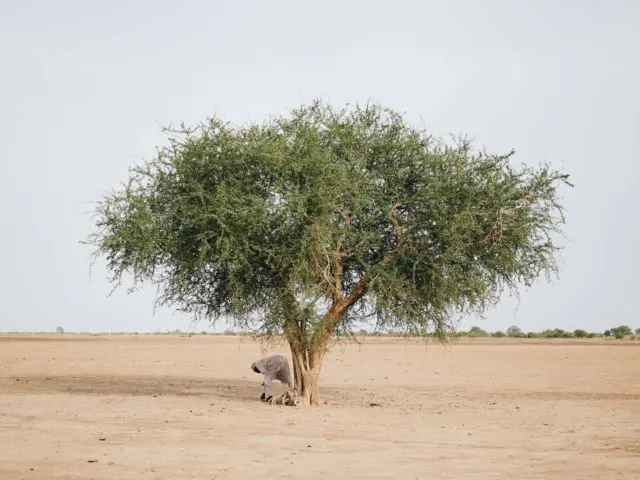
If you farm or work on degraded Sahel land, farmer managed natural regeneration may be a cheap way to bring trees back. Farmers protect and prune living stumps and sprouts instead of planting seedlings.
This guide is part of our wider look at agroforestry in africa.
| Item | Value |
|---|---|
| Niger land with more trees | About 5 million hectares |
| Extra grain estimated in Niger | 500,000 metric tons a year |
| Estimated gross income gain | About US$900 million per year |
| Trees regenerated by the SIM project | 200 million over 20 years |
| Crop yield change in the SIM project | 30 percent improvement |
Figures come from UNCCD and Christianity Today. They are estimates and can change, so check the sources before you rely on them.
What farmer managed natural regeneration is
The method treats a field that looks cleared as a hidden forest. Old roots and stumps still hold living buds, and they send up shoots every season unless the shoots are cut, grazed or ploughed under.
UNCCD quotes Tony Rinaudo, a World Vision Australia adviser, saying it is a traditional method of coppicing that has existed for centuries. The practice is not a new invention, but a revived habit that had been widely lost.
The basic steps are simple:
- Walk the field and find stumps, roots and young shoots of useful species.
- Choose the strongest few stems on each stump.
- Prune away the rest, and keep the trimmings for fuel or fodder.
- Protect the chosen stems from browsing and from the plough.
- Return each year to prune again and harvest wood as the trees mature.
Christianity Today explains the logic of pruning. Gently cutting back the 30-plus shoots that emerge from a stump concentrates water into the strongest few, which then grow quickly.
How it began in Niger
Christianity Today describes Rinaudo as the manager of a small reforestation project for the mission agency SIM in 1983. He knew that few of the 6,000 trees the agency had planted yearly since 1977 had survived the arid Sahel climate.
Because so few planted trees had survived, the project turned to regrowth from living stumps and roots.
The same article says Niger was devastated by drought in that year. SIM launched a food-for-work project with farmers who would agree to try the method on a portion of their land.
Why the Sahel needed it
UNCCD reports that in the early and mid-1980s soil fertility fell in marginal areas around the Sahara as people cut trees to make room for farming, and soil loss accelerated. Losing fertility hurts poor farmers most, because they cannot afford fertiliser to replace what erosion washes away.
The wider problem is large: UNCCD says more than 2 billion hectares of land worldwide are degraded. Trees on farms work against several causes at once.
- They shield fields from harsh winds that blow crop seeds away.
- They add shade, which lowers heat stress on crops.
- They supply fuelwood, fodder and poles close to home.
- Their roots and leaf litter help hold and feed the soil.
Because the trees already stand in the field, a farmer does not wait for a nursery cycle or pay for seedlings. The cost is mostly labour and attention.
What the results show
UNCCD says about 5 million hectares of degraded Sahel landscape in Niger have seen an increase in the number of trees. Rinaudo estimates that farmers there are growing an additional 500,000 metric tons of grain a year.
He also puts the rise in gross income at about US$900 million per year, without inputs or subsidies. These are estimates, so treat them as indicative.
Christianity Today reports that over 20 years the SIM project regenerated 200 million trees, raising density tenfold to 40 trees per hectare. It adds that crop yields improved by 30 percent.
Gains were not guaranteed everywhere. The same article reports that after payment and harvest in the early project, 75 percent of beneficiaries cut down the new growth and returned to their traditional practice.
Starting on your own plot
Begin small. Pick one field, and mark the stumps you plan to protect so that everyone working the land, including herders and hired hands, knows to leave them alone.
Species choice is a local decision. Keep the ones that already grow well nearby and that give you something you use, such as fodder, fuel, fruit or building poles.
Plan for the pruning calendar as well as the planting calendar. A simple routine keeps the work light:
- Prune back the extra shoots so water goes to the strongest few.
- Stack the cut branches for cooking fuel or animal feed.
- Keep a note of how many stems you left on each stump.
- Compare yields near the trees with yields in open ground over several seasons.
Those notes turn a hopeful practice into evidence you can show neighbours. They also help you decide whether to leave more or fewer stems next year.
Where the practice can go wrong
Unmanaged shoots can crowd a crop, so pruning is not optional. A field left alone for years may produce a thicket instead of a productive parkland.
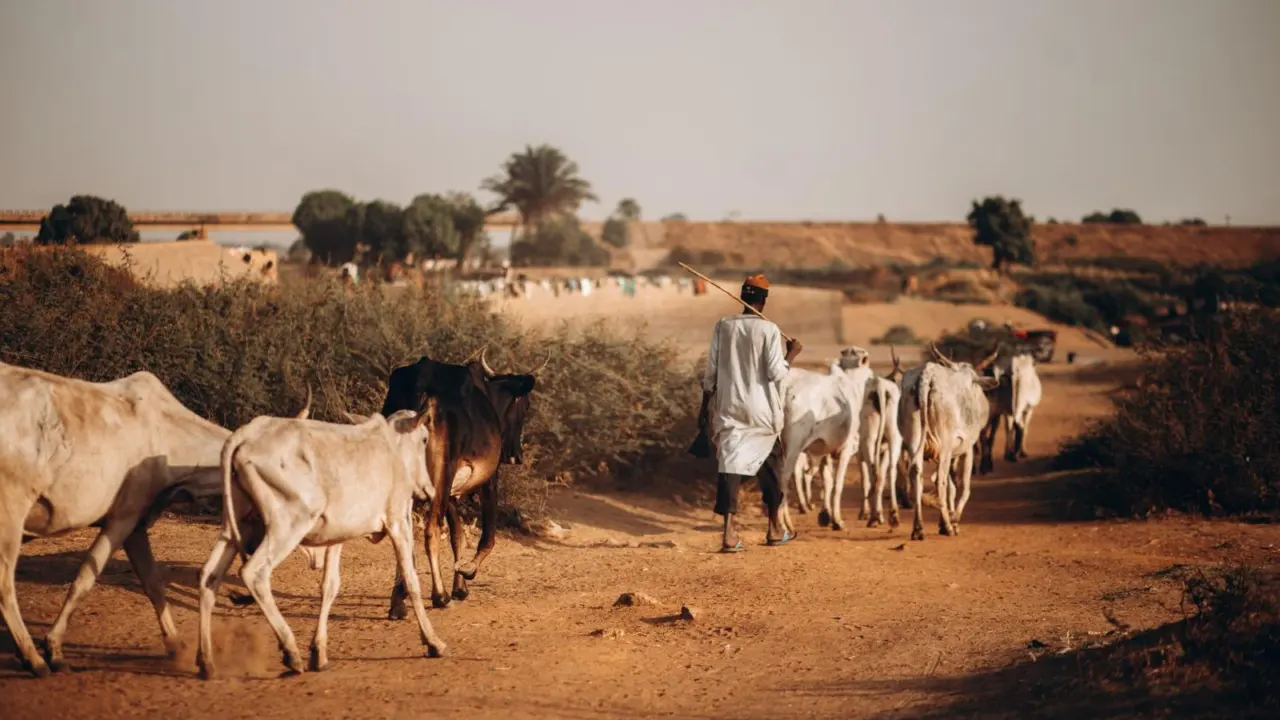
Grazing is the other pressure. Free-roaming animals can strip young shoots, so communities often need shared rules about when and where animals may browse.
Finally, a gain on paper is not a gain in a household unless the farmer holds the right to use the wood. That is why the reversion seen in the early food-for-work project matters so much for anyone designing a new effort.
Lessons for anyone trying it
That 75 percent figure teaches the main lesson: paying people once does not build a habit. Lasting change needs farmers to see the trees as their own and to benefit from them.
That usually means clear rights to the trees, so that a farmer who protects a stem can also harvest it. UNCCD notes that farmers saw trees and bushes could protect fields from harsh winds that blew crop seeds away.
Christianity Today also notes that the project grew from its first 12 villages to 100. Rinaudo recounted that spread, but the article does not say how it happened.
UNCCD is frank about limits. It says that although FMNR is showing green shoots of success in many countries, it won’t work just anywhere. A site needs living roots in the soil, and without them planting may still be needed.
Evidence quality matters too. Most of the large numbers above are program estimates reported by the people who ran the work, so plan with caution and measure your own plots.
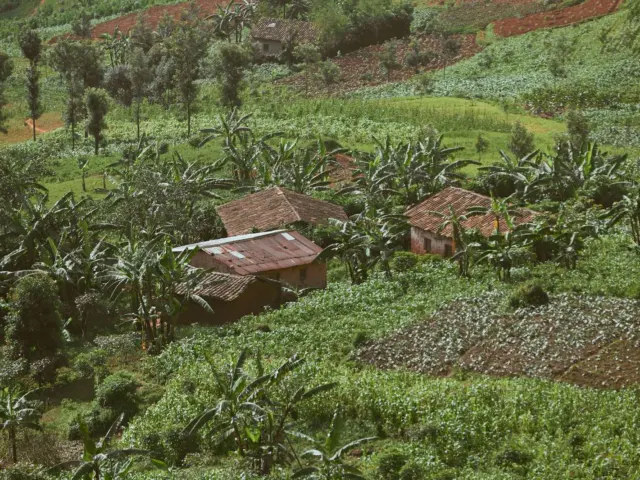
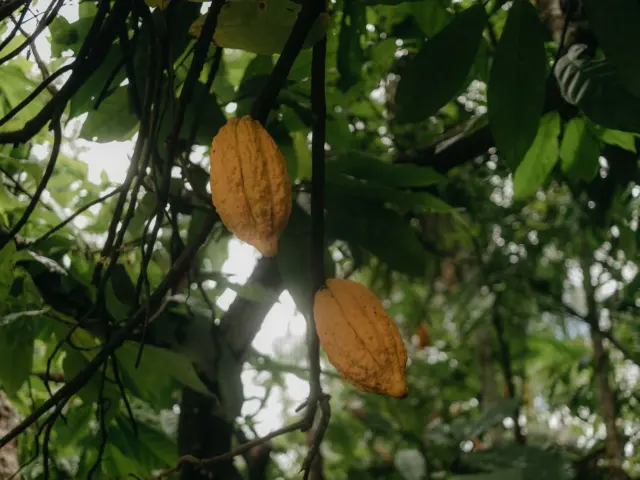
Other regions use trees on farms in different ways. For a highland example, see agroforestry in rwanda, and for a tree-crop system in a humid zone, read about cocoa agroforestry west africa.
Frequently asked questions
Do farmers have to plant anything?
Show answer
No. The method relies on stumps and roots already in the soil, so the main work is selecting and pruning shoots rather than raising seedlings.
Is this a new technique?
Show answer
No. UNCCD, quoting Rinaudo, describes it as a traditional coppicing method that has existed for centuries.
Which country is the best-known example?
Show answer
Niger. UNCCD reports that degraded Sahel landscapes there have seen more trees, and that farmers are growing extra grain as a result.
Does it work everywhere?
Show answer
No. UNCCD notes it won’t work just anywhere, because living root systems and farmer buy-in are needed.