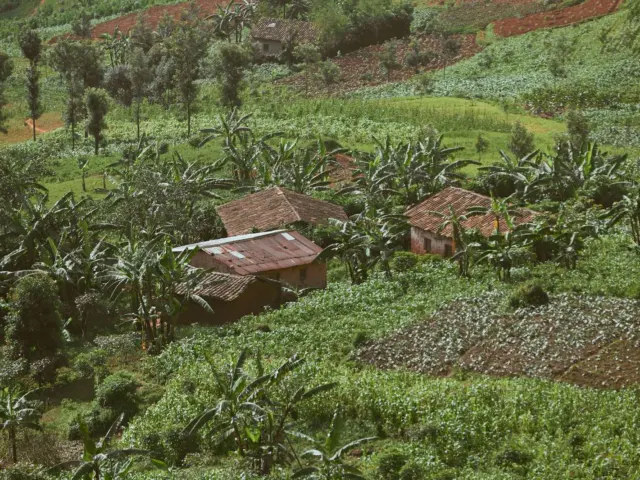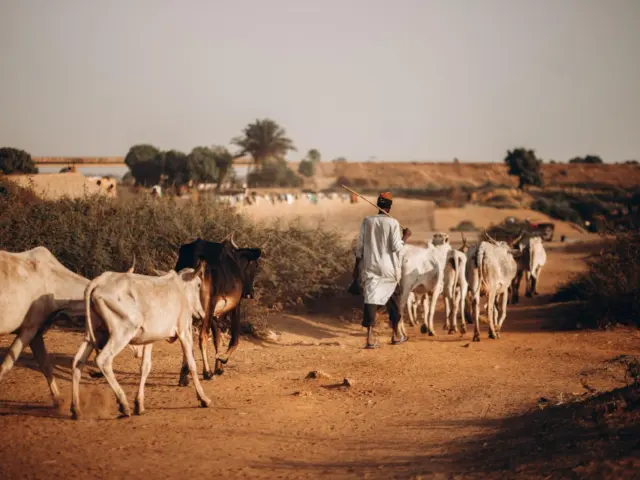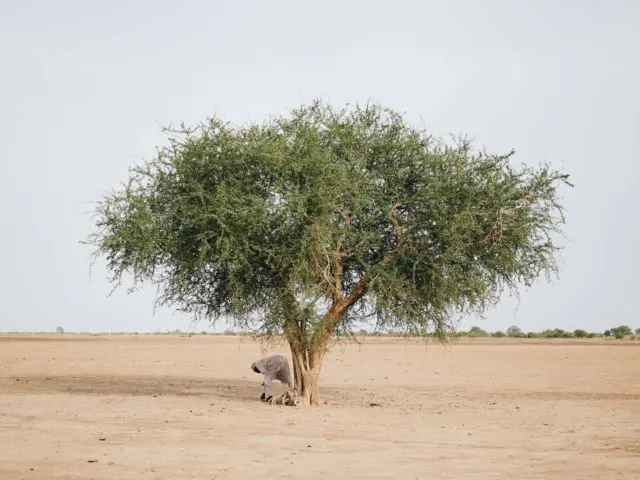
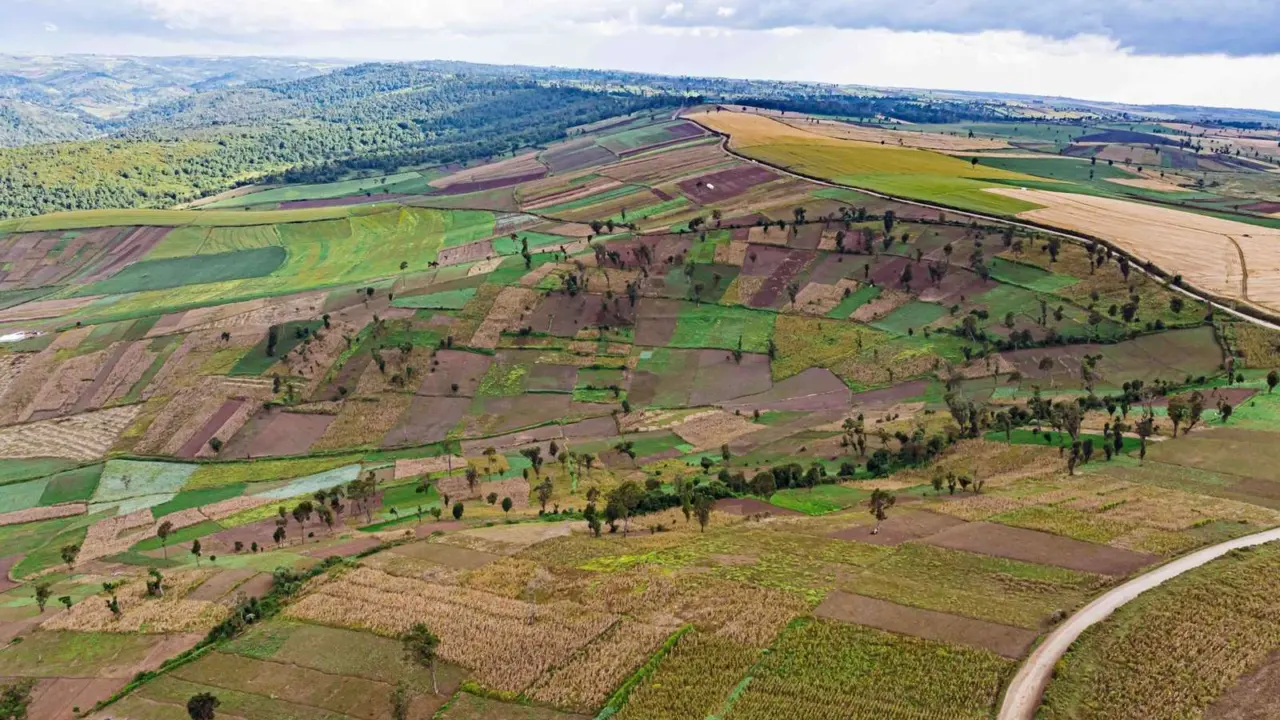
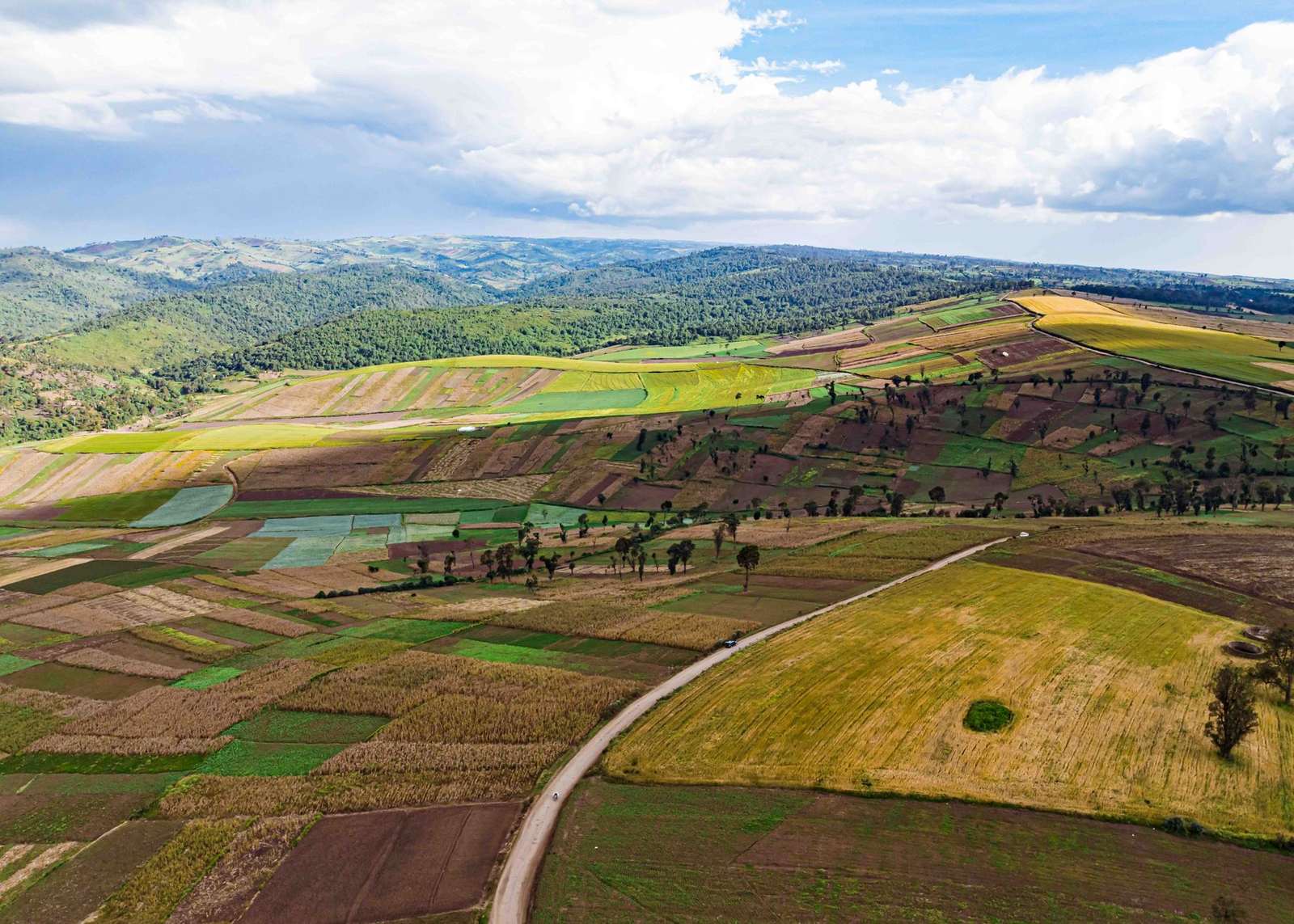
Wondering how farms and trees fit together here? Agroforestry in Kenya mostly means smallholders keeping trees on boundaries, in hedgerows, woodlots and scattered through fields, mixing exotic and native species.
| Item | Value |
|---|---|
| Planted and managed trees on densely farmed land (FAO study) | 5 to 10 percent of agricultural land |
| High potential farmland under trees or natural woody cover (FAO study) | Over 20 percent |
| Nyando study in western Kenya | Trees and shrubs inventoried farm by farm |
| National Agroforestry Strategy period | 2025-2035 |
| Strategy tree cover goal | 30% by 2032 |
These figures come from an FAO study of trees on farms in Kenya and an IIED account of the national strategy. They can change, so check the sources before you rely on them.
Why trees on farms matter in Kenya
Kenya’s farms are small and crowded, so much of the country’s tree growing happens on private land rather than in forests. An FAO study found that planted and managed trees and shrubs usually cover 5 to 10 percent of agricultural land in densely populated, heavily farmed areas.
Counting natural woody cover too, the same study says over 20 percent of high potential agricultural land was under trees or woody growth. Treat these as figures from one study rather than a precise picture of today’s national situation.
The FAO study also notes that woody cover (planted trees, woodlands, bushland and so on) accounts for at least 15 percent and as much as 35 percent of agricultural land across all zones it examined. Trees are not a side feature of Kenyan farms; they are a large share of the land.
Why do farmers keep so many trees on small plots? The reasons are practical: wood for building and fuel, shade, fruit, protection of soil on slopes, and a store of value that can be sold when cash is needed. Trees also let a household diversify beyond a single crop.
The FAO study was itself prompted by a gap in knowledge. It notes that there have been few efforts to assess the impact of tree growing on the smallholder economy, or why trees have assumed such an important role.
For the wider continental picture, see our overview of agroforestry in africa.
Common agroforestry practices on Kenyan farms
A study in the Nyando region of western Kenya inventoried trees and shrubs on 106 farms. It classified them into five practices, a useful list of what you will see across the country.
- Hedgerows: rows of trees or shrubs, often along field edges or between plots.
- Multipurpose trees on farm: scattered trees giving fruit, shade, fodder, timber or fuel.
- Riparian buffers: trees along streams and gullies that hold soil in place.
- Woodlots: blocks of trees grown mainly for poles, timber or fuel.
- Boundary planting: trees marking and lining farm edges.
The study found woodlots held the highest amount of above-ground carbon stock, while multipurpose trees on farm had the highest diversity of tree and shrub species. Different practices therefore do different jobs, and farmers often combine several on one holding. You can read the findings in the Frontiers study of tree and shrub diversity.
A closer look: what the Nyando farms show
The Nyando study covered two sites, lower and middle Nyando. Altogether 3,353 trees and shrubs were inventoried in the lower site and 6,346 in the middle site, so the pattern rests on a large count rather than a few anecdotes.
The dominant contributor in the middle site was Grevillea robusta at 37.8%, while in the lower site it was Euphorbia tirucalli at 16.5%.
That contrast is a reminder that “agroforestry in Kenya” is not one system. Altitude, rainfall, farm size and market access change which trees dominate, and a hedgerow in a dry lowland looks very different from one in a wetter, higher area.
The study describes its research as part of work on how small-scale forestry helps meet the UN Sustainable Development Goals. For farmers, the practical message is simpler: trees on small plots store carbon and also supply wood, shade and fruit.
Which trees do Kenyan farmers plant?
The FAO study says planted species are predominantly introduced varieties, such as Grevillea robusta, Eucalyptus or Acacia mearnsii. It adds that a number of indigenous species, such as Markhamia, are also grown.
Grevillea is popular because it grows straight and can be planted along boundaries without taking much room. Eucalyptus and Acacia mearnsii are typically grown for poles and wood products. Indigenous trees such as Markhamia show that farmers also value native species.
The mix of exotic and native trees reflects what farmers need. Exotics give quick poles and timber for sale, while indigenous species often bring local knowledge, adaptation to local soils and climate, and cultural value. Many farms hold both.
Choosing a species is a trade-off between speed, market value, and effect on neighbouring crops. Local extension advice and species trials matter, because results differ between sites.
How the national strategy shapes the future
Kenya’s first National Agroforestry Strategy (2025-2035) was developed with input from the Farm Forestry Smallholder Producers Association of Kenya. As of IIED’s account of the strategy, it aims to support the establishment of five million acres of woodlots in arid and semi-arid lands. It also aims to strengthen value chains and contribute to raising tree cover to 30% by 2032.
The same source lists problems that held agroforestry back: fragmented policies, weak coordination between forestry and agriculture, limited financing, inadequate extension services and poorly developed value chains. Many farmers also face insecure land tenure and limited access to quality seedlings and markets.
Kenya is not alone in setting big restoration goals. The great green wall africa initiative shows a similar push across the Sahel, and our guide to agroforestry in ethiopia compares a neighbouring country’s approach.
Success will depend on whether those barriers ease. Better seedling supply, clearer land rights and stronger extension would let more smallholders plant trees they can safely keep and harvest. The strategy also promotes stronger coordination among institutions, more investment, improved research and extension, and the greater inclusion of women and young people.
Watch for published monitoring before treating the 30% goal as achieved or on track.
Practical lessons for farmers and readers
- Match the practice to the goal: woodlots for wood and carbon, multipurpose trees for diversity, buffers for streams.
- Mix species rather than relying on one.
- Secure access to good seedlings and, where possible, land tenure before investing in long-lived trees.
This site is independent and educational. It offers no consulting or enquiries, so contact your local extension office for advice on your own land.
Frequently asked questions
What is agroforestry in Kenya?
Show answer
It is the growing of trees together with crops or livestock on farms. Common forms include hedgerows, multipurpose trees, riparian buffers, woodlots and boundary planting.
Which trees are common on Kenyan farms?
Show answer
According to the FAO study, planted species are mostly introduced ones such as Grevillea robusta, Eucalyptus and Acacia mearnsii, alongside indigenous species such as Markhamia.
What is Kenya’s tree cover target?
Show answer
The National Agroforestry Strategy (2025-2035) aims to contribute to raising tree cover to 30% by 2032, according to IIED’s account.
Which practice stores the most carbon?
Show answer
In the Nyando study of 106 farms, woodlots had the highest above-ground carbon stock, while multipurpose trees on farm had the highest species diversity. A farmer may choose one or the other depending on the goal, or combine them.
Do trees take up a lot of Kenyan farmland?
Show answer
The FAO study found planted and managed trees usually cover 5 to 10 percent of agricultural land in densely farmed areas, with woody cover reaching higher shares overall.