Wondering how farms in Ethiopia’s highlands feed families and grow coffee on small plots? Agroforestry in Ethiopia answers it with layered gardens: enset, coffee, fruit and shade trees growing together on the same land.
This guide is part of our wider look at agroforestry in africa.
| Item | Value |
|---|---|
| Gedeo agroforestry area | 89,239.7 ha, about 69.3% of Gedeo zone |
| Woody plant diversity | Up to 50 species from 35 families per 100 m2 |
| Population supported in Gedeo | Close to 900 persons/km2 |
| People who rely on enset as a starch staple | Around 20 million |
| Possible extra enset beneficiaries | 87.2 million to 111.5 million people |
Figures come from the Satoyama Initiative case study on Gedeo and a Freethink report on enset research. They can change as new studies appear, so check the source before you rely on them.
What agroforestry looks like in the Ethiopian highlands
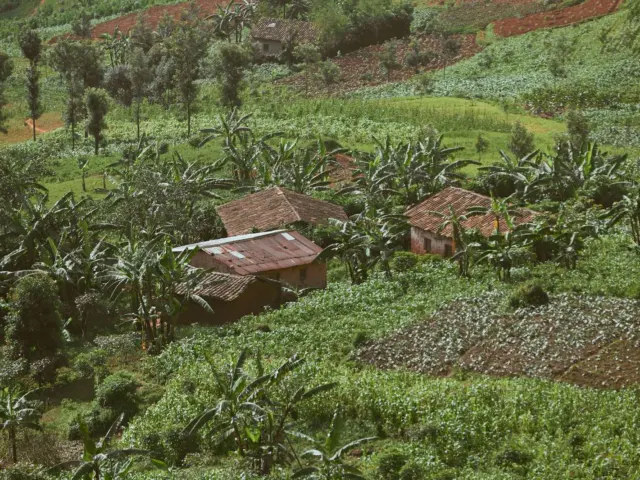
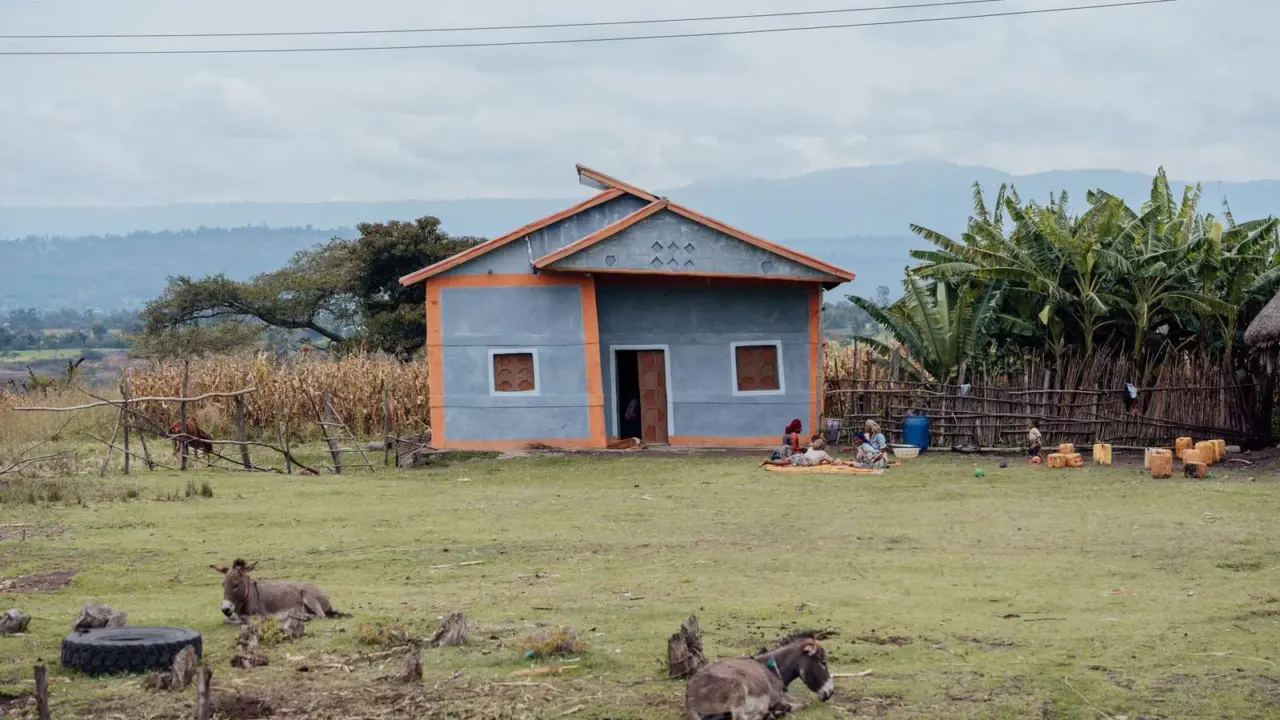
In southern Ethiopia, home garden agroforestry means trees, crops and livestock managed together around the family house. These are not tidy rows. They are layered plots where a tall tree canopy, a middle layer of crops and a ground layer of vegetables share the same soil.
The two anchor crops are enset and coffee. The Satoyama Initiative case study describes enset (Ensete ventricosum, a banana-like plant) and Arabica coffee as the pillars of food security in the Gedeo system. Around them, farmers add fruit trees, maize, vegetables and other useful species.
The result looks more like a managed forest than a field. That is why researchers often treat these gardens as a model of how people can farm and keep biodiversity at once.
Enset: the “false banana” that feeds millions
Enset is the quiet hero of the system. Researchers quoted by Freethink say its high productivity and flexible harvest provide a starch staple for around 20 million people. Treat any single number as approximate.
Several traits explain its value to a smallholder:
- It is starchy and grows in a variety of conditions.
- It is somewhat tolerant of drought.
- It can be harvested at any time of year, so a family always has food stored in the garden.
The plant is useful beyond food. The same report notes that its strong fibres go into construction, and its leaves are used for baking bread, roofing and packaging.
Because enset is evergreen and broad-leaved, it also covers the soil all year. On steep hillsides that cover helps slow runoff and erosion, which matters where heavy rain meets sloping farmland.
Coffee under shade
Coffee is the cash side of the garden. In the Gedeo zone, the case study shows coffee-based agroforestry where Arabica bushes grow beneath a canopy rather than in open sun.
Shade does several jobs at once. It moderates temperature around the coffee, adds leaf litter to the soil, and gives farmers timber, fruit or fodder from the same plot. Farmers who rely on shade-grown coffee are not choosing between trees and income.
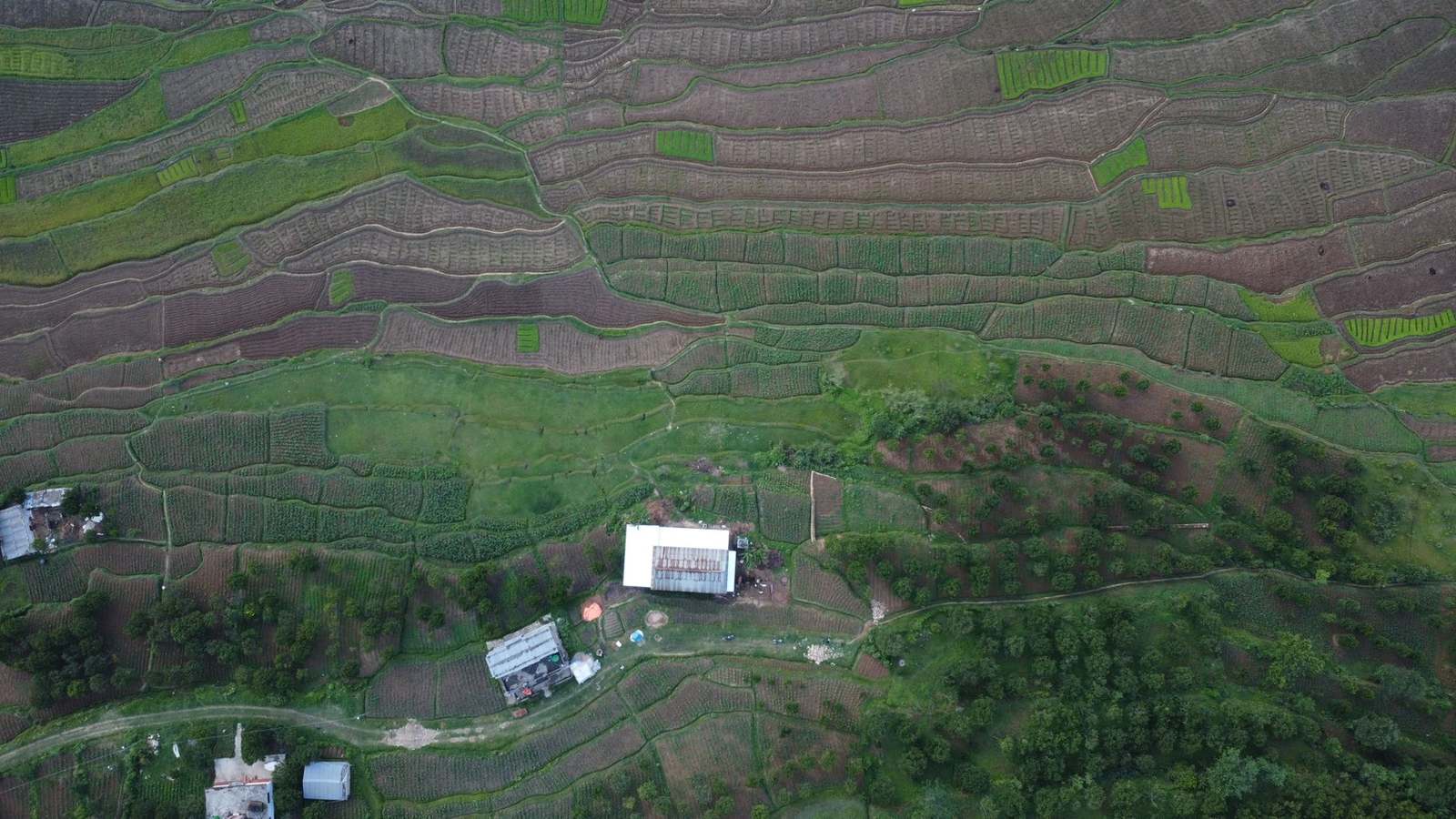
The case study also notes that farmers cultivate enset, maize, coffee, chat (a stimulant plant), fruits and vegetables together. That mix spreads risk. If one crop fails or its price falls, others still produce.
The Gedeo example in numbers
The Gedeo zone sits 369 km from Addis Ababa, on the main highway toward Kenya. According to a 2015 study cited by the case study, the agroforestry area covers 89,239.7 ha, approximately 69.3% of the zone.
Two features stand out:
- Diversity: the agroforest hosts as many as 50 woody plant species belonging to 35 families in a 100 m2 plot.
- Density of people: the system supports close to 900 persons/km2, a very high figure for rural farmland.
The case study, citing a 2013 work, calls Gedeo agroforestry the most structurally complex agroforestry system in Ethiopia. It also notes that staple crops such as enset and maize, cash crops such as coffee and chat, fruits and vegetables are all cultivated together.
Pressures and open questions
These gardens are not guaranteed to last. Our sources do not measure how long the Gedeo system will last, so treat it as a working example rather than a guarantee.
Chat appears in the Gedeo mix as a cash crop alongside coffee, according to the case study. Our sources do not give a count of how the balance between these crops is changing.
Another open question is spread. The Freethink report says enset cultivation might prove feasible for an additional 87.2 million to 111.5 million people across Ethiopia, Uganda, Kenya and Rwanda. For comparison with a neighbour that grows trees on farms in different ways, see our page on agroforestry in kenya, and for a southern-African case, agroforestry in malawi.
Why the layers matter for soil and water
The Gedeo case study explains that plant diversity in a home garden, together with the organisms around it, helps form and maintain soil structure and retain moisture and nutrients. It also promotes nutrient recycling, because fallen leaves and crop residues return to the same plot.
This is especially important in hillside farming, where agriculture may lead to rapid loss of soil. Livestock are a component of the Gedeo system too, so animals, crops and trees feed each other in one small cycle. That closed loop is a large part of why the gardens stay productive on the same land year after year.
For a farmer with little land, that cycle is the point. Instead of buying every input, the garden produces food, fodder, shade and fertility from its own parts.
Lessons for other farmers
Ethiopia’s gardens suggest a few practical ideas that travel well:
- Pair a food staple with a cash crop in the same plot, so one family covers both needs.
- Keep a tree canopy over the cash crop to give shade and extra products.
- Choose perennial plants that can be harvested across the year, which smooths food supply.
- Keep the mix varied; the Gedeo system, described as the most structurally complex in Ethiopia, grows many crops and species together.
These are lessons from a long-evolved local system, not a fixed recipe. Soils, altitude, rainfall and culture differ, so any farmer should test changes on a small area first and seek local extension advice.
Frequently asked questions
What is enset?
Show answer
Enset (Ensete ventricosum) is a herbaceous, banana-like plant that is a starch staple in southern and south-western Ethiopia. Freethink reports researchers saying it feeds around 20 million people.
Why is coffee grown with enset?
Show answer
The two crops complement each other: enset gives food and ground cover, and coffee gives cash. The Gedeo case study calls them the pillars of food security in that system.
Where is the Gedeo agroforestry system?
Show answer
The Gedeo zone is in southern Ethiopia, 369 km from Addis Ababa and 90 km from the regional capital Hawassa, on the highway toward Kenya.
Could enset grow outside Ethiopia?
Show answer
Researchers calculate it might be feasible for an additional 87.2 million to 111.5 million people across Ethiopia, Uganda, Kenya and Rwanda, according to Freethink’s report. This is a modelled estimate, not a promise.